




Research project · ΚΜΡ6-0069625
Remote computer repair and data recovery
Development of equipment and software for remote computer repair and data recovery services
Computer Systems developed and tested equipment, software and procedures that let a technician recover data from a faulty drive and repair a computer remotely, while the drive and the computer stay with their owner.
- Implementation
- 8 Oct 2021 – 6 Feb 2025
- Total budget
- €105,093.46
- Public expenditure
- €82,218.37
- Action
- Investment Plans of Innovation

The project «Development of equipment and software for remote computer repair and data recovery services» (Project code: ΚΜΡ6-0069625) was implemented in the framework of the Action «Investment Plans of Innovation» of the Program «Central Macedonia», PARD 2021-2027, that is co-funded by the European Union and Greece. The project started under the Operational Programme «Central Macedonia 2014-2020» and was transferred to the Program «Central Macedonia» 2021-2027.
Key results
- 60–85%of critical sectors read remotely from most of the 30 faulty drives in the laboratory tests
- 30–85%of sectors read in many cases from faulty drives in China previously considered inaccessible
- 18/18hard drives with hardware damage on which the CS method recovered more data than R-Studio and Linux dd (ET 2024)
- 2papers published in IEEE Xplore
How remote data recovery works
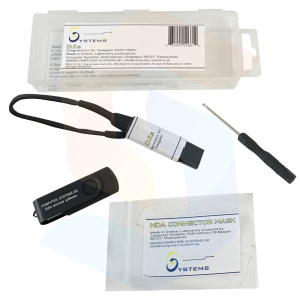
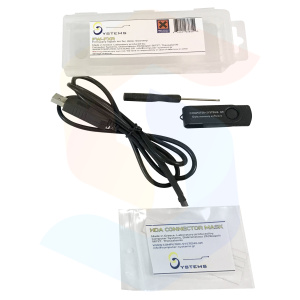
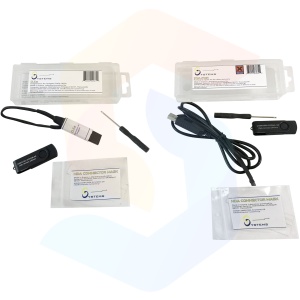
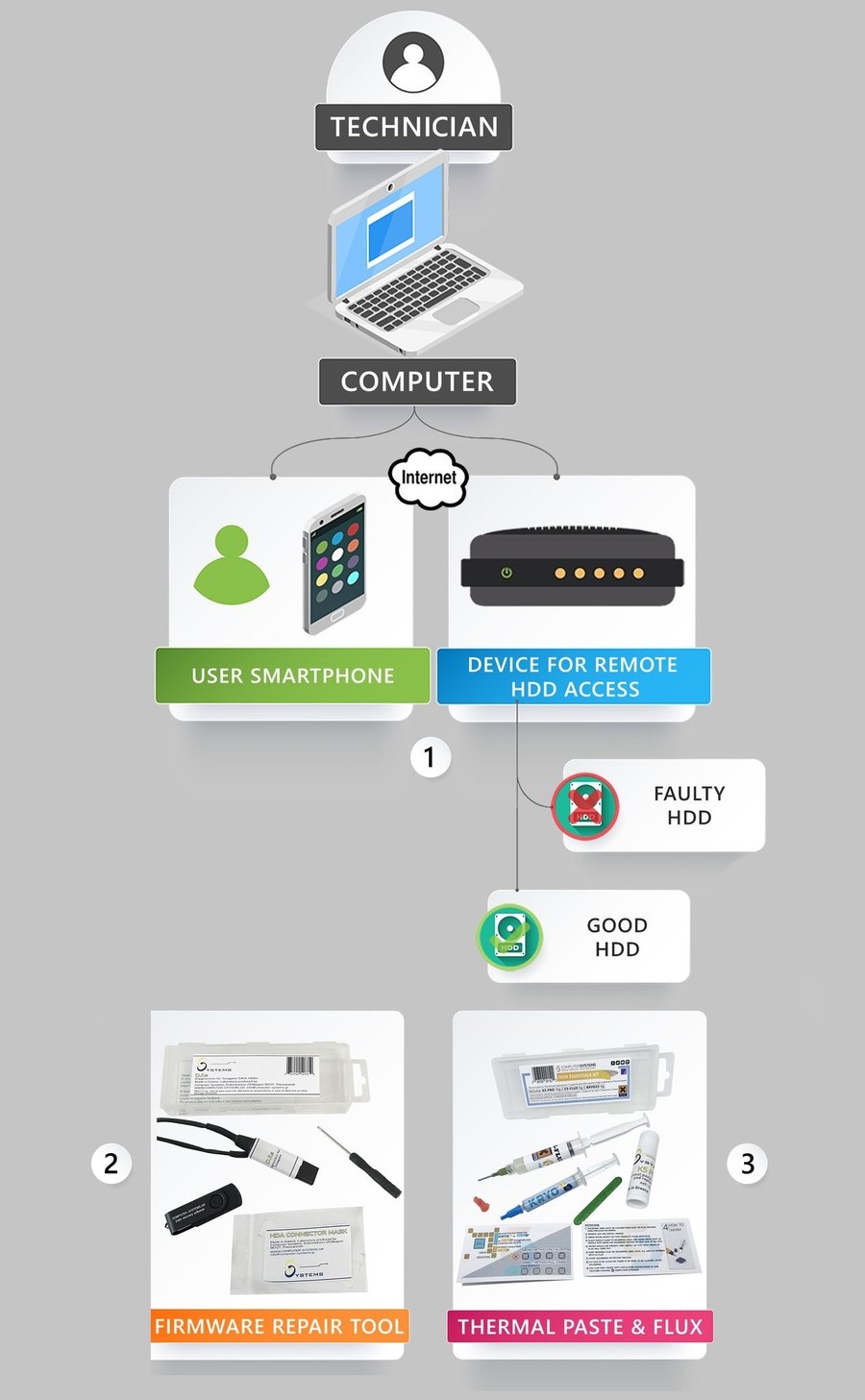
The user receives a package with everything the job needs. Once the faulty drive and a new destination drive are connected to the remote access device, the technician takes over from the Computer Systems lab and runs the recovery over the internet, guiding the user by phone or video call whenever the hardware needs handling. The package can also include the firmware repair tool kit from an earlier Computer Systems research project, together with the company’s thermal materials for drives that overheat.
CSRemoter
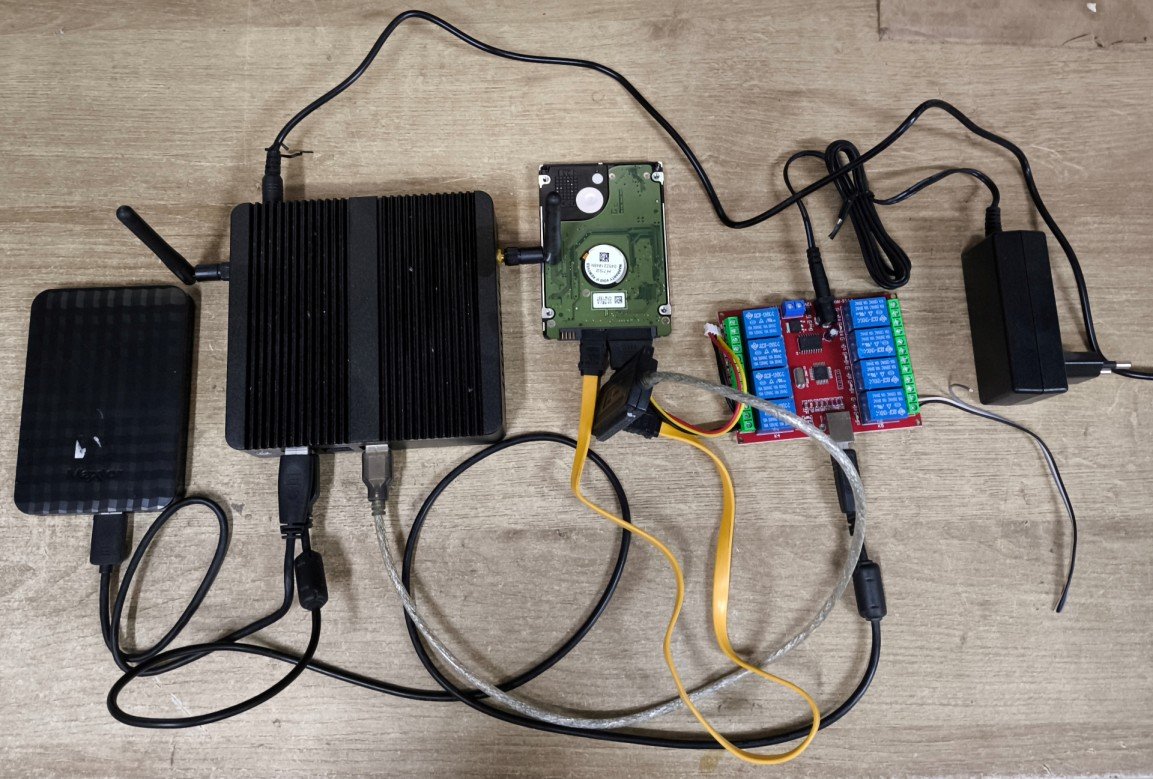
CSRemoter is the remote data recovery device that Computer Systems designed and built in the project. A mini PC running Ubuntu Linux reads the faulty drive through a USB-to-SATA adapter that carries data only, while the drive takes its power from an external 12 V and 5 V supply through a USB-controlled relay. This gives the software full control of the drive’s power, so it can restart the drive at any moment. The recovered data goes to a separate destination drive, and the technician connects to the device with RustDesk. A USB version, which works with an ordinary laptop or desktop computer, was used in the field trial.
auto_imager
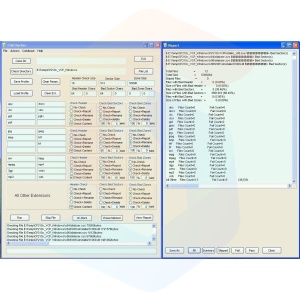
auto_imager, the recovery software developed in the project, automates the whole process with the auto-restart technique that Computer Systems developed from its laboratory experience. Some damaged drives respond only for a short time after each power-up. auto_imager reads the drive with GNU ddrescue and watches the flow of data. When reading stalls, it restarts the drive through the relay, skips a small area and carries on, keeping a map of every skipped area to retry at the end. A job that would take hundreds of manual restarts and weeks of round-the-clock supervision runs on its own.
Keeping the drive cool with K5 PRO
A remote recovery keeps a weak drive reading for hours and sometimes for days, so temperature control is part of the method. In the laboratory tests, hard drives above 50 °C showed more read errors, and low-cost SSDs above 55 to 60 °C showed more ECC errors and dropped off the system until they cooled down.
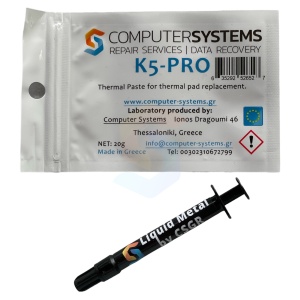
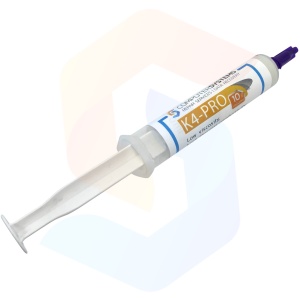
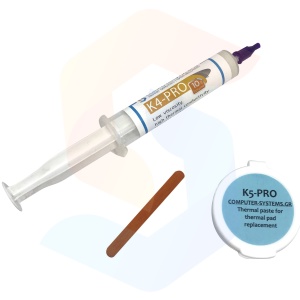
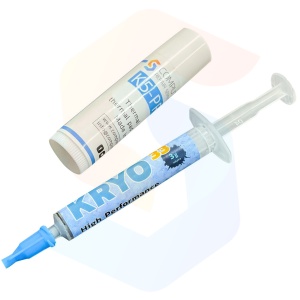
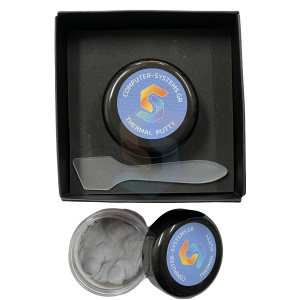
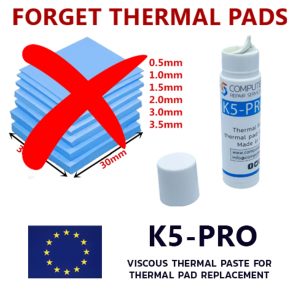
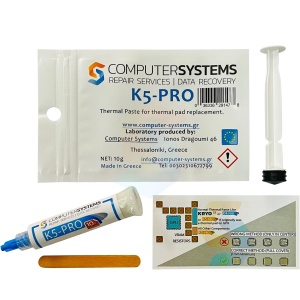
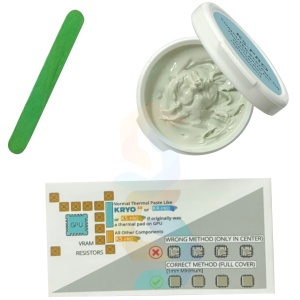
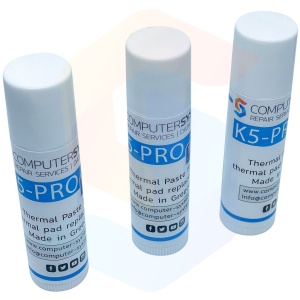
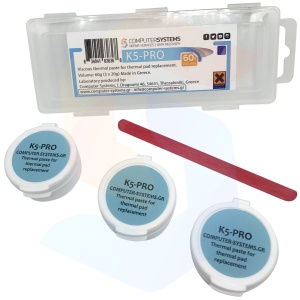
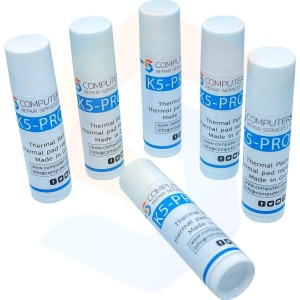
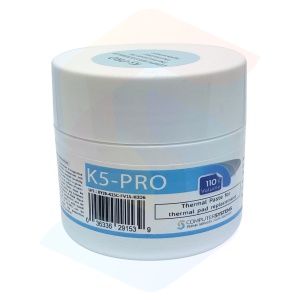
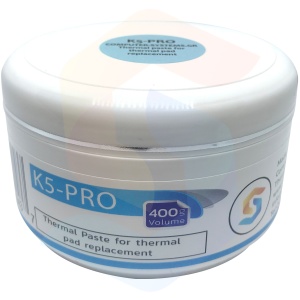
When a drive overheats, the technician guides the user to fit a heatsink on it. K5 PRO, the thermal putty made by Computer Systems, is the ideal material for mounting a heatsink on devices such as drives, which have no heatsink of their own. K5 PRO is sticky, so it brings the heatsink as close to the drive as possible and holds it there, while it carries the heat from the drive into the heatsink. The drive stays cool through the long recovery sessions.
Results
Laboratory tests
To create realistic wear, about 300 new SSDs and 100 new HDDs of different makes and capacities went through several weeks of accelerated ageing with continuous random writes. Remote recovery was then tested on 30 faulty drives, 15 HDDs and 15 SSDs, with the technician working only through the remote system. The table gives the share of sectors read in the area each test targeted, often the first 10 GB, where the file system records sit.
| Drive and fault | Sectors read remotely |
|---|---|
| HDD, logical faults | Over 80% in almost all cases, up to 95% |
| HDD, mild mechanical faults | Usually 60–70% |
| HDD, severe mechanical faults | Typically 40–50% |
| SSD, mild wear | Up to 80–85% |
Automatic power cycling was decisive in at least 5 of the 30 drives, which could be read only with periodic restarts. Overall, most drives gave from 60% to 85% of their critical sectors.
Field trial with a partner in China
To test the method in conditions close to real use, Computer Systems ran an extensive trial with a computer repair business in China. The partner had collected more than 100 faulty drives from its everyday work, most of them hard cases and some marked unrecoverable after local attempts. The research team sent the USB version of CSRemoter and a preconfigured Ubuntu computer and worked entirely over a remote connection, while three of the partner’s employees, each with a different background, connected the drives under the team’s guidance.
In many cases 30% to 85% of the sectors were read, depending on the fault, from drives that had been considered inaccessible. The trial confirmed that, with step-by-step guidance from the research team, operators with varying experience can carry out a remote recovery effectively.
Comparison with other remote methods
The ET 2024 paper compared three remote recovery methods on drives from the partner in China: R-Studio, one of the best-known commercial recovery programs with remote access, the free Linux dd command, and the CS method, which combines the USB version of CSRemoter with the company’s software and its auto-restart technique. Each method read the first 10 GB of every drive.
On all 18 hard drives with hardware damage, the CS method recovered the most data. On 9 of them, R-Studio and dd recovered nothing from the tested area, while the CS method recovered from 6% to 91%. On the 79 drives with minor faults, all three methods came close to 100%, with the CS method slightly ahead on some Hitachi and Toshiba drives.
Hard drives with hardware damage
- R-Studio
- Linux dd
- CS method
- 1WD 3.5"
- 2WD 3.5"
- 3WD 3.5"
- 4WD 3.5"
- 5WD 3.5"
- 6WD 3.5"
- 7Seagate 3.5"
- 8Seagate 3.5"
- 9Hitachi 2.5"
- 10Toshiba 2.5"
- 11Toshiba 2.5"
- 12Toshiba 2.5"
- 13Toshiba 2.5"
- 14Toshiba 2.5"
- 15Toshiba 2.5"
- 16Toshiba 2.5"
- 17Generic 2.5"
- 18Seagate 2.5"
Show the data table
| Drive | R-Studio | Linux dd | CS method |
|---|---|---|---|
| 1 · Western Digital 3.5" | 40% | 64% | 81% |
| 2 · Western Digital 3.5" | 20% | 43% | 76% |
| 3 · Western Digital 3.5" | 31% | 47% | 82% |
| 4 · Western Digital 3.5" | 57% | 71% | 92% |
| 5 · Western Digital 3.5" | 13% | 43% | 56% |
| 6 · Western Digital 3.5" | 6% | 32% | 41% |
| 7 · Seagate 3.5" | 0% | 0% | 12% |
| 8 · Seagate 3.5" | 0% | 0% | 6% |
| 9 · Hitachi 2.5" | 0% | 0% | 6% |
| 10 · Toshiba 2.5" | 4% | 0% | 93% |
| 11 · Toshiba 2.5" | 0% | 0% | 80% |
| 12 · Toshiba 2.5" | 5% | 0% | 95% |
| 13 · Toshiba 2.5" | 20% | 0% | 90% |
| 14 · Toshiba 2.5" | 0% | 0% | 89% |
| 15 · Toshiba 2.5" | 0% | 0% | 70% |
| 16 · Toshiba 2.5" | 0% | 0% | 91% |
| 17 · Generic 2.5" | 0% | 0% | 12% |
| 18 · Seagate 2.5" | 0% | 0% | 22% |
Remote computer repair
The project applied the same remote approach to computer repair, with a focus on overheating, one of the most common faults in computers. On a video call, the technician guides the user to remove the heatsink and fans, clean the dust and apply new thermal material, and checks the temperatures before and after the repair. Tests with the partner in China, on computers of different specifications, confirmed that overheating can be fixed reliably this way.
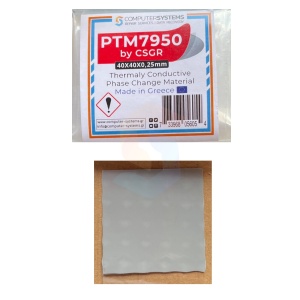
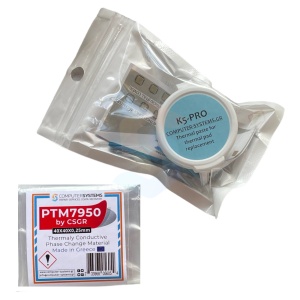
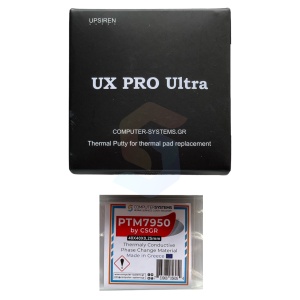
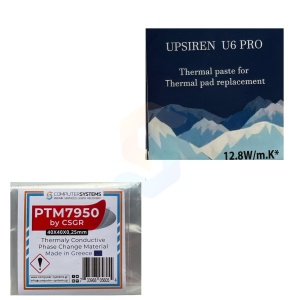
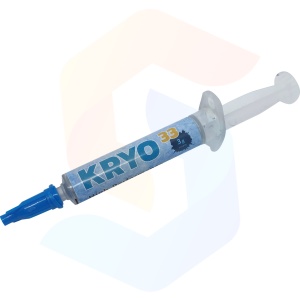
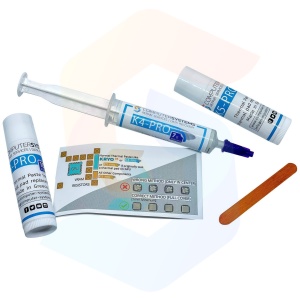
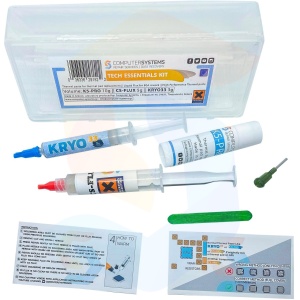
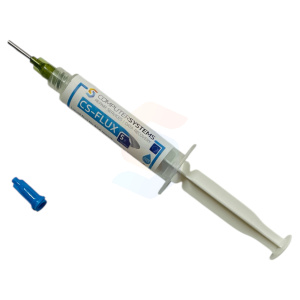
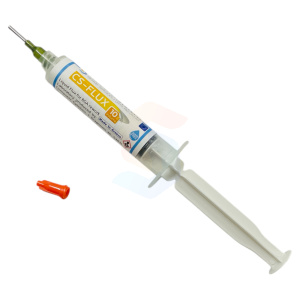
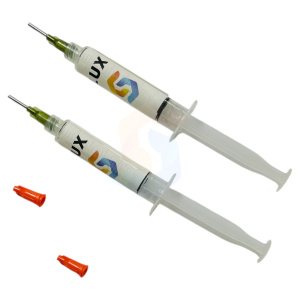
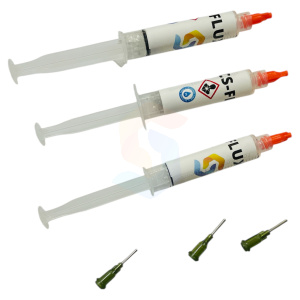
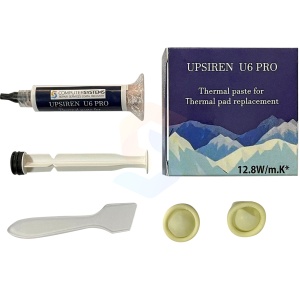
The service uses ready kits made by Computer Systems: Tech Essentials (K5 PRO, KRYO33, CS-FLUX), Ultimate Repaste (K5 PRO, KRYO33) and K5 PRO with PTM7950 by CSGR. In these kits K5 PRO takes the place of fixed-thickness thermal pads. It fills every gap at its exact height, so the user has no pad thickness to choose. A monitoring program written in the project logs the temperature sensors to a CSV file and can serve the readings over the network, so the technician follows them live.
Publications
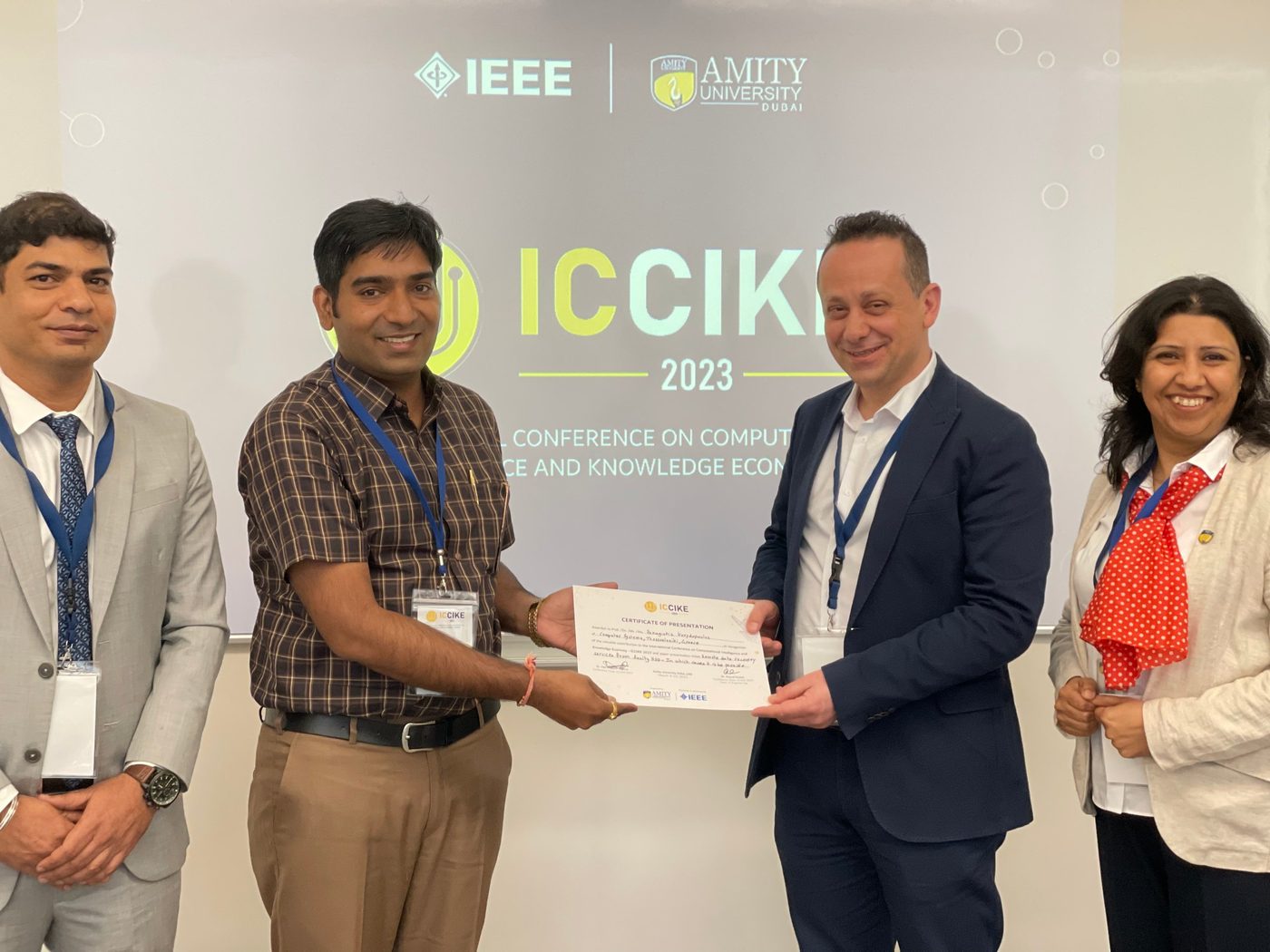
ICCIKE 2023 · Dubai, UAE
Distance Data Recovering from Faulty HDDs: Preliminary Investigation
2023 International Conference on Computational Intelligence and Knowledge Economy (ICCIKE), pp. 41–46. DOI: 10.1109/ICCIKE58312.2023.10131700
Analyses the lab’s records of real faulty hard drives and proposes the remote recovery package. Of the 37 successful recoveries in those records, 19 involved faults that can be handled remotely over the internet.
Read on IEEE Xplore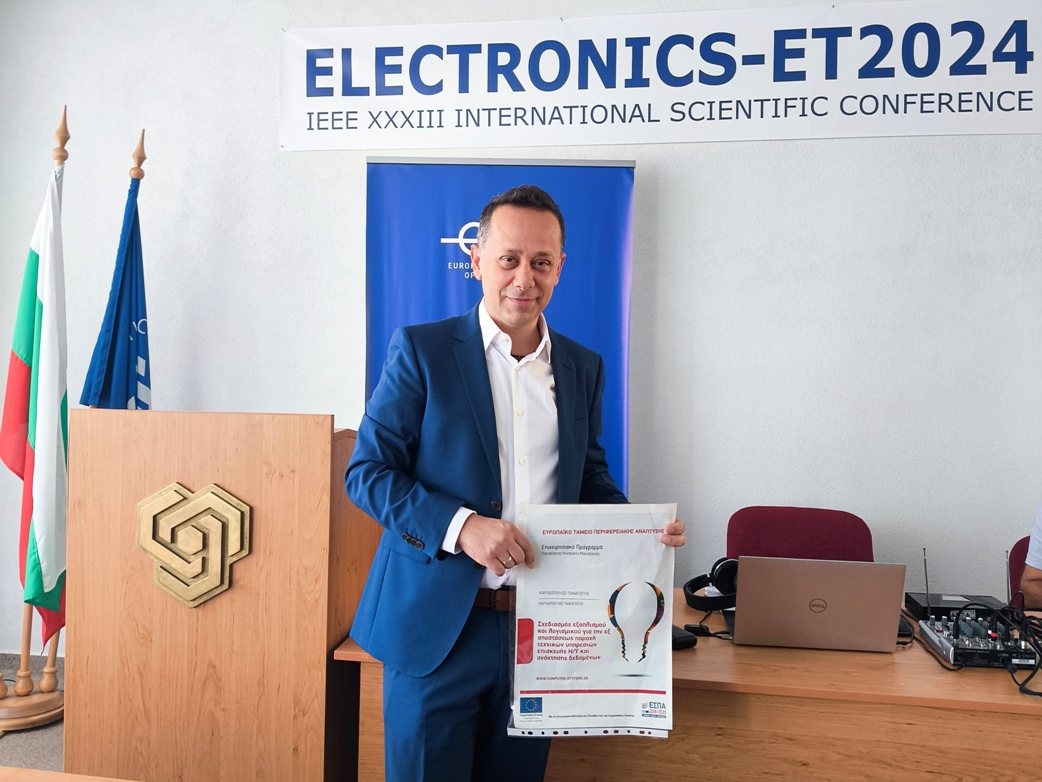
ET 2024 · Sozopol, Bulgaria
Comparative Analysis of Remote Access Data Recovery Methods: Introducing a Novel Approach and Hardware
2024 XXXIII International Scientific Conference Electronics (ET), pp. 1–5. DOI: 10.1109/ET63133.2024.10721529
Compares R-Studio, Linux dd and the CS method with CSRemoter on drives from the partner in China. The CS method recovered more data and enabled partial recovery from drives with hardware damage.
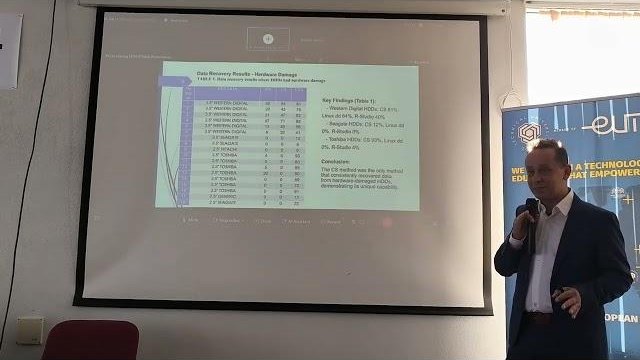
Read on IEEE XploreThe presentations on video
Events
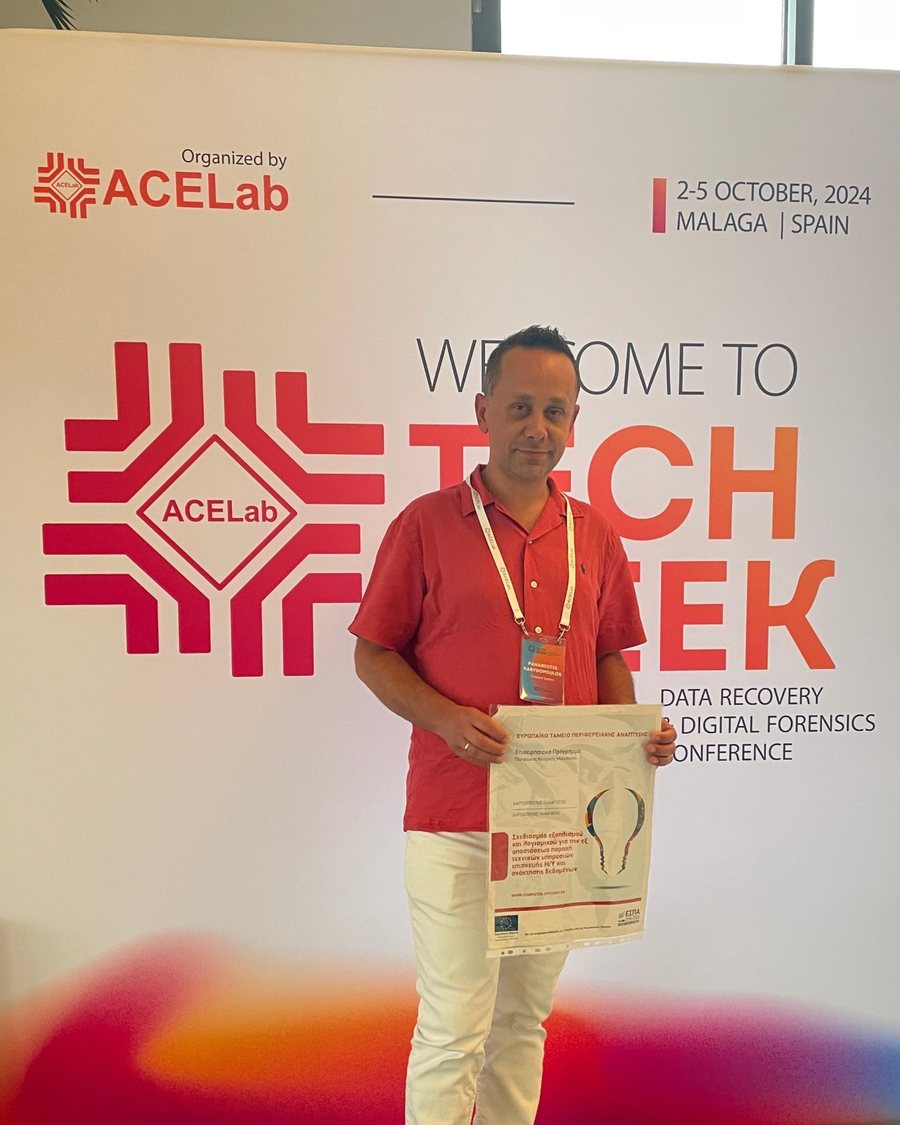
Málaga, Spain · 2–5 October 2024
ACE Lab Tech Week 2024
Computer Systems took part in this international conference on data recovery and digital forensics, so that its research keeps up with international developments in data recovery.

Toronto, Canada · 8 February 2024
NGen N³ Summit
Computer Systems attended the summit of Next Generation Manufacturing Canada (NGen) at the Toronto Congress Centre, to follow the latest developments in advanced manufacturing and technology.
The research continues
Remote data recovery and remote repair, as developed in this project, are offered to individuals and businesses.
Contact usSeagate is a trademark or registered trademark of Seagate Technology LLC or one of its affiliated companies. Linux is the registered trademark of Linus Torvalds in the U.S. and other countries. Ubuntu is a registered trademark of Canonical Ltd. IEEE Xplore is a registered trademark of IEEE. YouTube is a trademark of Google LLC. Western Digital, WD, Toshiba, Hitachi, R-Studio, RustDesk, GNU, ACE Lab and NGen are trademarks or registered trademarks of their respective owners. These names appear on this page to identify the hard drives, the software and the services that the research worked with or compared, the events it took part in, and the publications and videos that present it. CSRemoter and auto_imager were developed by Computer Systems. K5 PRO, KRYO33, CS-FLUX, PTM7950 by CSGR and the Tech Essentials and Ultimate Repaste kits are products of Computer Systems. All other trademarks are the property of their respective owners.