


























Research project in progress · Code ΕΚΠΑΡ01-0063510
Data recovery and remote computer diagnostic services with AI
Computer Systems is developing an artificial intelligence system for remote fault diagnosis and data recovery from computers, with new methods for modern storage media such as M.2 SSDs. The AI analyses the evidence from a faulty drive and proposes the next step, while automatic checks and the technician’s authorization decide what reaches the drive.
- Implementation
- 28 Nov 2025 – 27 Nov 2028
- Total budget
- €64,209.60
- Public expenditure
- €51,367.68
- Programme
- Competitiveness, ESPA 2021-2027
The project «Data Recovery and Remote Computer Diagnostic Services with AI» is co-financed by the European Union (European Regional Development Fund) and Greek national funds through the Program COMPETITIVENESS of the Partnership Agreement 2021-2027 (ESPA 2021-2027), under the call RESEARCH – INNOVATE (project code: ΕΚΠΑΡ01-0063510).
At a glance
- 1stconference paper of the project, presented orally at ISMSIT 2026 in Antalya, Türkiye
- 30real Seagate hard drives in the first experiment
- 36months of research, from November 2025 to November 2028, in three work packages
Aims of the project
In remote data recovery the faulty drive stays with its owner, and a specialist recovers its data over the internet through equipment that connects the drive to the laboratory. Computer Systems developed this equipment and its methods in its earlier research. The current project brings artificial intelligence into remote fault diagnosis and data recovery, to support each decision of the technician with an analysis of the evidence.
The project aims at:
- analysis with AI and machine learning of the evidence that the remote equipment collects, for the diagnosis of faults in storage media and other computer components, with accuracy that improves as the system learns
- new data recovery methods for modern storage media such as M.2 SSDs
- a system that owners with limited technical knowledge can use, tested in real and simulated conditions by both women and men
- remote diagnosis and repair with less need for the physical presence of specialised staff, which supports the right to repair and reduces electronic waste
The project also creates new jobs in the company’s research team in Thessaloniki.
Work plan
The research runs for 36 months in three work packages of 12 months each.
-
Months 1–12
Analysis and determination of AI application
The team reviews the results of the company’s earlier research projects and the literature, and identifies the steps of diagnosis and recovery where machine learning and AI can be applied.
Deliverable: analysis report
-
Months 13–24
Development of the AI system
The AI system for remote diagnosis and data recovery takes shape, with new methods for modern storage media such as M.2 SSDs.
Deliverables: report and scientific publication at an international conference
-
Months 25–36
Implementation and testing of the system
The whole team implements the system and tests it in real and simulated conditions with users of limited technical knowledge. An economist analyses costs, such as the cost of training the AI system over time, and prepares its commercial exploitation.
Deliverables: report and prototype system
First results
The first study of the project examines how AI can take part in owner-side remote data recovery while control of the drive stays with people. The proposed system adds a proposal layer to the remote recovery appliance. The AI analyses the available evidence and suggests a next step, and a Command Broker checks each suggestion against what the equipment can do, what the evidence supports and which actions require the technician’s authorization. Only the actions that pass these checks reach the equipment.
The experiment used 30 real Seagate hard drives. With the same evidence, a change in the choices available to the AI changed its recommendations. In one case, a 2 TB drive that reported a capacity of only 4 GB received two very different recommendations, and the presentation follows both through the checks that decide what reaches the equipment.
The study takes a practical problem of the laboratory into experimental evaluation and scientific discussion, and it builds on the remote recovery appliances of the company’s earlier research.
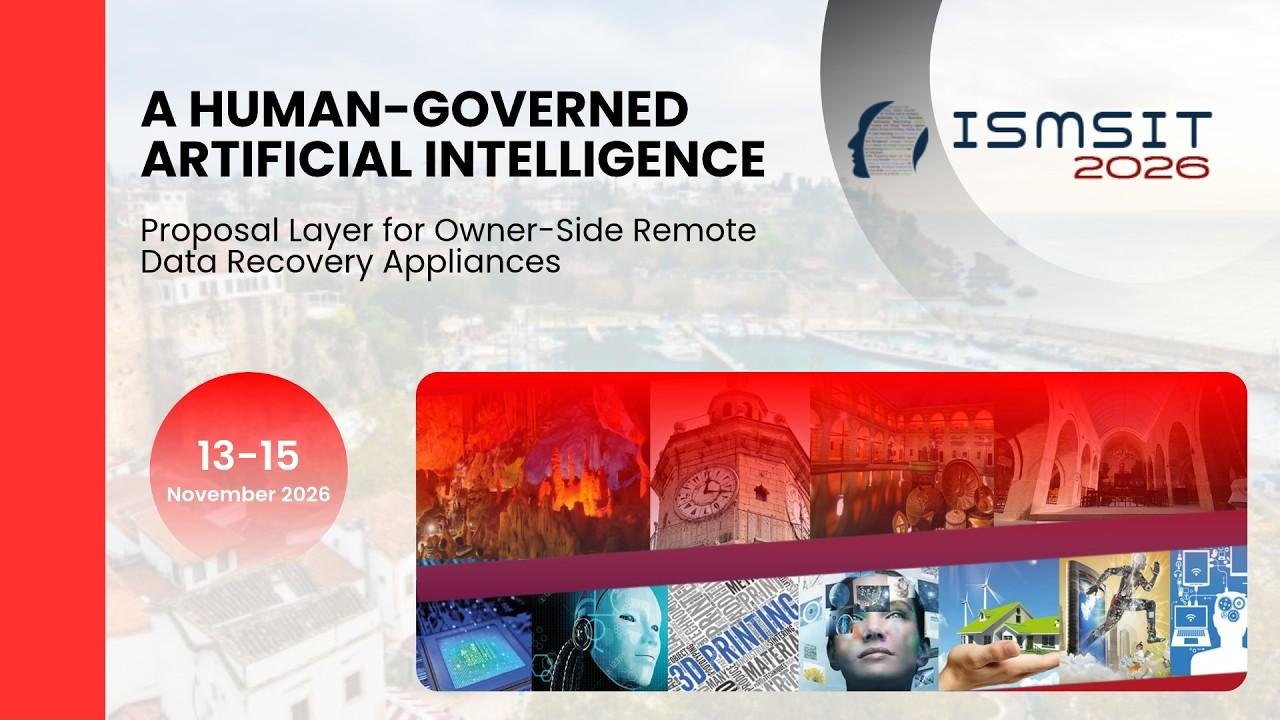 Conference presentation · Video
AI in Data Recovery: Who Has the Final Say?
Panagiotis Karydopoulos presents the work of the research team at ISMSIT 2026, with the experiment on 30 Seagate hard drives.
Watch on YouTube
-
2026Conference paper
A Human-Governed Artificial Intelligence Proposal Layer for Owner-Side Remote Data Recovery Appliances
Built on earlier research
The project continues two earlier research projects of Computer Systems in data recovery.
- Research project · 2021–2025Remote computer repair and data recoveryEquipment and software for remote data recovery and remote computer repair: CSRemoter, the auto_imager software and a guided remote repair service.View project
- Research project · 2013–2015Data recovery methods and toolsImproved data recovery methods and the tools FW-FXR, Diagnostics for Seagate (DfS) and FileChecker by CS.View project
Computer Systems produces its tools and materials in Thessaloniki, and its products have been exported to more than 110 countries.
Explore the productsSeagate is a trademark or registered trademark of Seagate Technology LLC or one of its affiliated companies. YouTube is a trademark of Google LLC. These names appear on this page to identify the hard drives of the experiment and the video of the presentation. FW-FXR, Diagnostics for Seagate (DfS) and FileChecker by CS are products of Computer Systems. All other trademarks are the property of their respective owners.