



Research project · Code 332
BGA rework and thermal materials
Simplified and improved BGA component processing procedure
Computer Systems developed a repair method for BGA components that small laboratories can apply with cost-effective equipment, built on new materials designed and produced by its own research team. The project created a series of underfill materials and a family of thermal pastes for thermal pad replacement, and brought six new products to market.
- Implementation
- 1 Sep 2012 – 31 Aug 2015
- Total budget
- €166,320
- Public expenditure
- €116,424
- Programme
- Human Resources Development, NSRF 2007-2013

The project «Simplified and improved BGA component processing procedure» (code 332) was implemented under the Action «Support of enterprises for the employment of highly qualified scientific personnel» of the Operational Programme «Human Resources Development», NSRF 2007-2013, and was co-funded by the European Union (European Social Fund) and Greece. Intermediate Managing Body: General Secretariat for Research and Technology.
Key results
- 6new products: BGA COAT, K5 PRO, K4 PRO, CS-FLUX, UPSIREN U6 PRO and UPSIREN UX PRO Ultra
- 5publications: three journal articles, a paper in IEEE Xplore and Greek patent GR 1008100
- 626customer laptops and PCs returned to service in the 24-month field evaluation
- 2014Innovation Award of the Thessaloniki Chamber of Small and Medium Sized Industries
Why BGA components fail
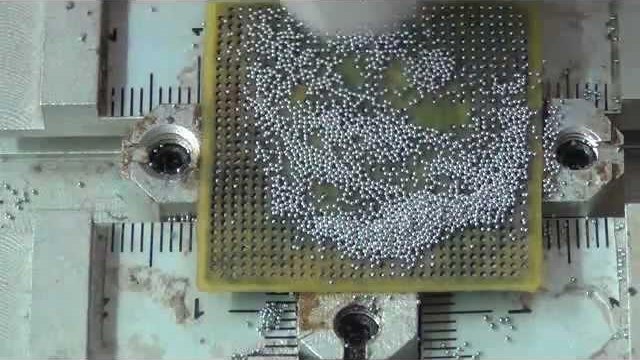
A BGA (ball grid array) package connects a graphics processor, a chipset or a CPU to the motherboard through an array of solder balls 0.3 to 0.6 mm in diameter, hidden under the package. Heat cycles, board flex and mechanical shock crack these joints over time, moisture and oxidation weaken them, and metal filaments known as tin whiskers can grow between neighbouring balls. BGA failures became a widespread fault in laptops, graphics cards and game consoles.
Computer Systems opened in 2008 as a laptop repair laboratory focused on motherboards, just as these failures spread across the market, and built deep expertise in BGA rework. Reballing, the standard repair, removes the old solder balls and places a new set. The research set out to extend the life of the repaired joint, with a method and materials that a small laboratory can apply with cost-effective equipment.
A permanent BGA stencil
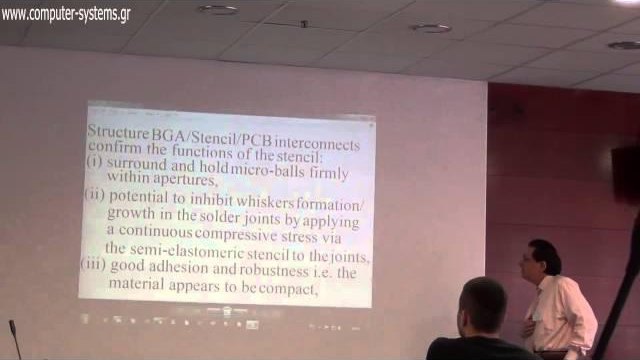
In standard rework, a metal stencil guides the new solder balls into place and is then removed. The research team developed a family of non-metallic stencils, made from elastomeric and semi-elastomeric materials, that remain permanently between the BGA and the printed circuit board. Each stencil is a perforated membrane 0.3 to 0.4 mm thick, with an aperture for every solder ball. Once in place, the stencil:
- holds every solder ball firmly in its aperture
- keeps the joints under continuous compressive stress, which has the potential to inhibit tin whisker growth
- absorbs board flex and drop shock, which makes corner and edge adhesives unnecessary
- adheres to both the BGA and the board and coats the joints against moisture and corrosion
- conducts heat, evening out the temperature at the base of the BGA and carrying heat towards the heatsink
The stencil materials combine a binder, a thermally conductive filler and crumb rubber powder from recycled car and truck tyres, which makes the stencil tougher. The team studied latex, polyester resin, cementitious and bituminous binders. These materials entered sensitive electronic hardware for the first time, carrying know-how from materials science and recycling into electronics repair.
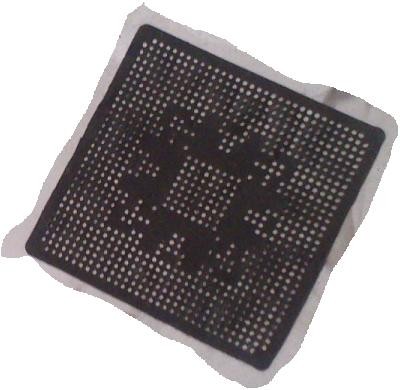
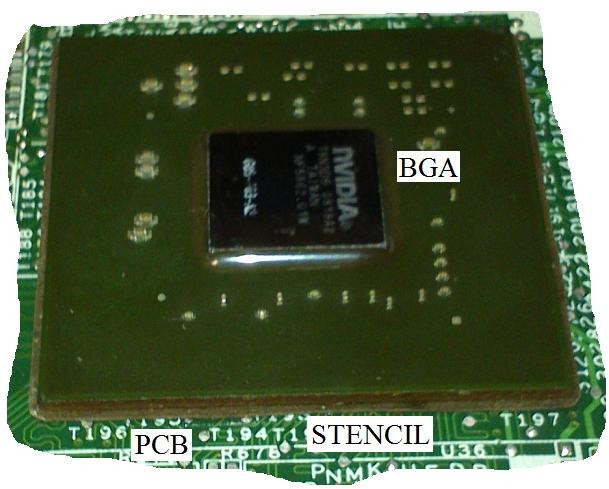
The stencil takes shape in two ways. It can be laser cut and drilled from a cured membrane and placed between the BGA and the board during resoldering. It can also be cast in place: the liquid mixture flows into the gap between the BGA and the board and cures there into a stencil that surrounds every joint. Casting is the basis of BGA COAT. The permanent stencils are protected by Greek patent GR 1008100.
Underfill materials and BGA COAT
Along with the stencils, the team created a series of underfill materials that form the permanent stencil by casting. Every member of the series cures in air at room temperature within 24 hours and withstands operating temperatures up to 260 °C, while its thermal conductivity rises with the share of conductive filler.
| Binder / filler | Thermal conductivity (W/m·°C) | Viscosity (Pa·s) |
|---|---|---|
| 70% / 30% | 0.4 | 0.024 |
| 60% / 40% | 1.7 | 0.055 |
| 50% / 50% | 4.0 | 0.322 |
BGA COAT
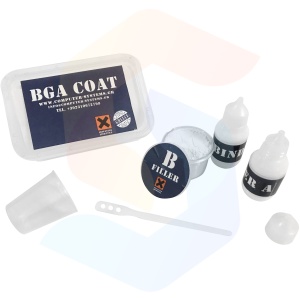
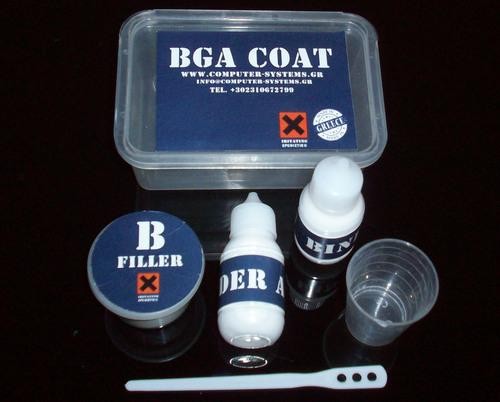
BGA COAT is the underfill of the series that went directly to market. The kit holds a liquid binder and a conductive powder, which the technician mixes with a spatula and feeds into the gap between the BGA and the board. The mixture cures at room temperature in 48 hours. Cured BGA COAT bonds the package to the board, forms a protective coating around the solder balls and keeps its form up to 250 °C. While it cures, it absorbs the humidity under the component, so the joints end up sealed in a dry environment. Its thermal conductivity, higher than that of most thermal pads and pastes, evens out the temperature at the base of the BGA.
BGA COAT was designed to improve the stability of BGA components in high-risk applications, such as military, automotive, rail, aviation and marine electronics, and it serves repair laboratories in the reballing and reflow of GPUs and other BGA components in laptops and game consoles. Compared with the epoxy adhesives used as underfills, which were then sold for industrial use only, BGA COAT is a non-epoxy, non-toxic material that needs only the spatula supplied in the kit and comes in quantities suited to small workshops. One kit covers up to 100 repairs.
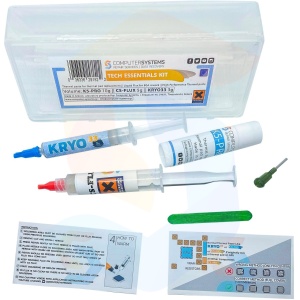
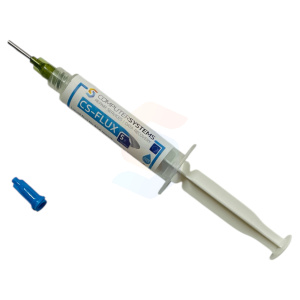
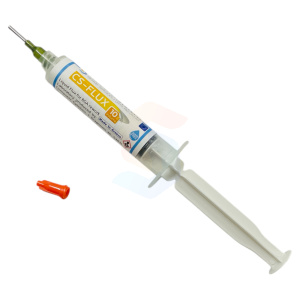
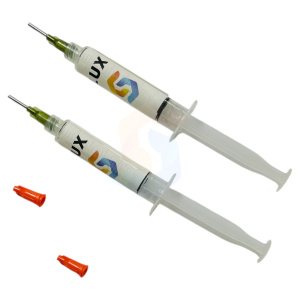
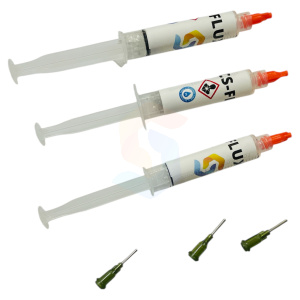
For the soldering steps of the method, the team developed CS-FLUX, a flux for the reballing and reflow of BGA components. Today CS-FLUX is a halogen-free, no-clean flux for SMD microsoldering.
Thermal pastes for thermal pad replacement
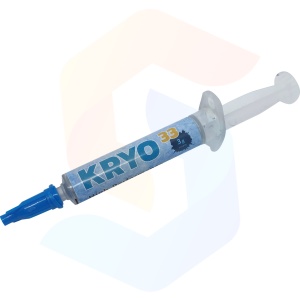
Heat drives many BGA failures, so the project also studied the path that carries heat from the components to the heatsink. Memory chips and power components usually sit under thermal pads of fixed thickness, which lose full contact once the heatsink is removed and refitted. The research team developed a family of thermal pastes for thermal pad replacement: viscous, shapeable materials that fill each gap at its exact height and carry heat with a thermal conductivity well above that of the pads they replace.
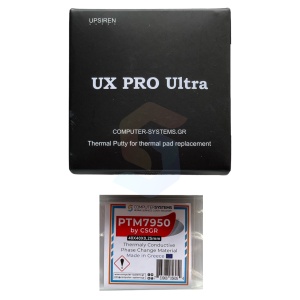
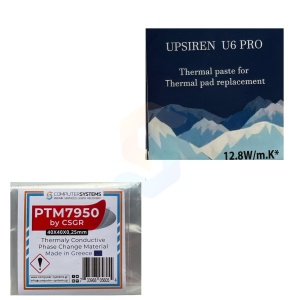
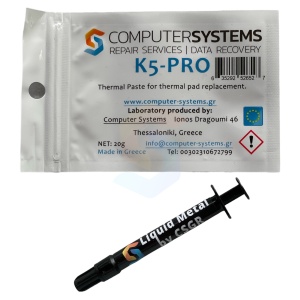
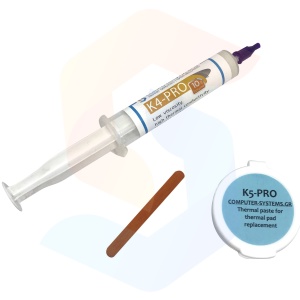
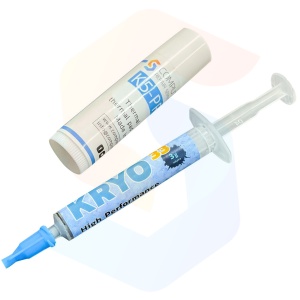
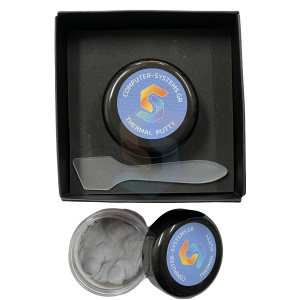
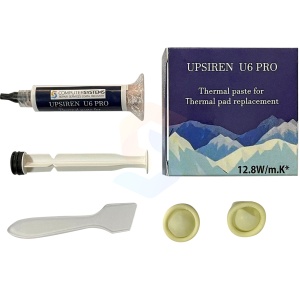
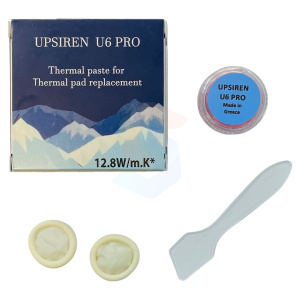
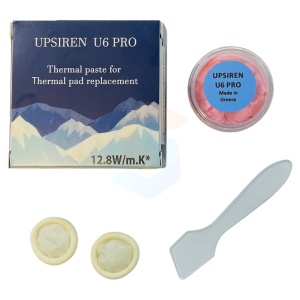
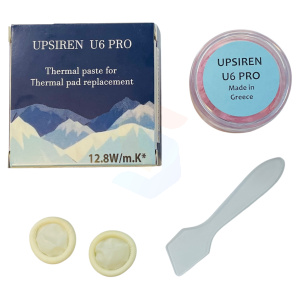
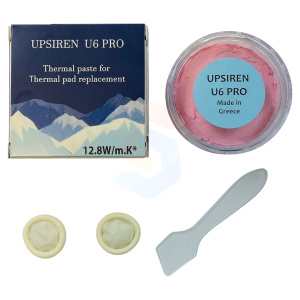
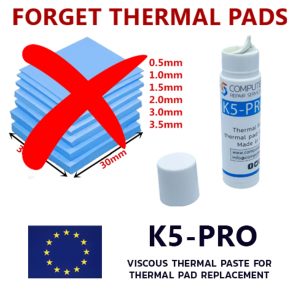
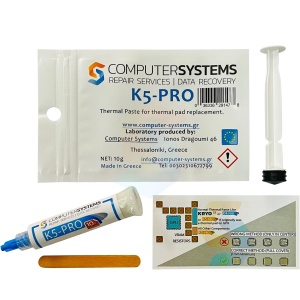
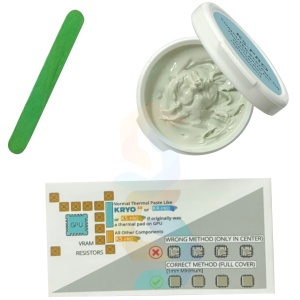
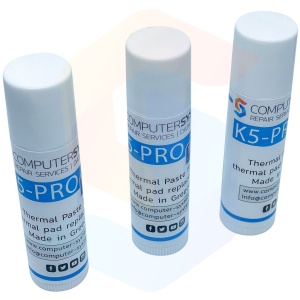
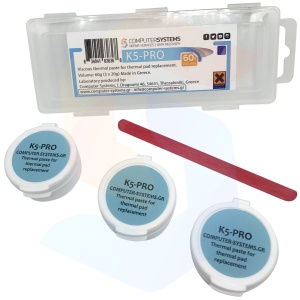
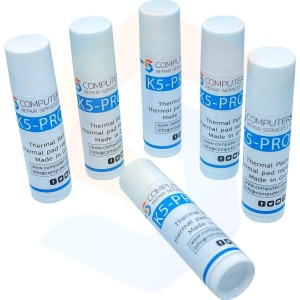
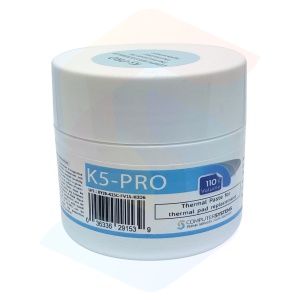
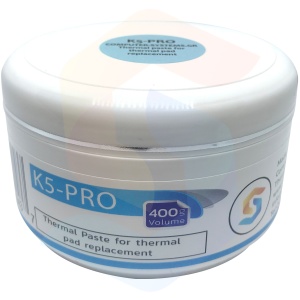
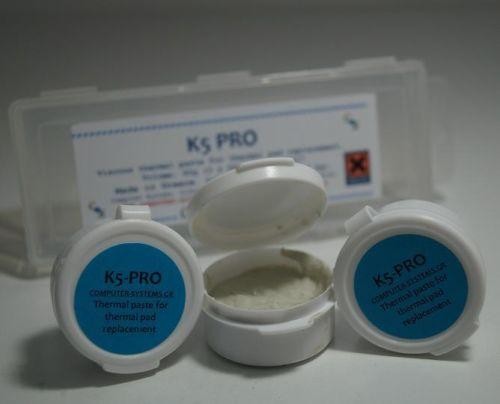
At that time, K5 PRO was the member of the family best suited to retail and DIY use. It replaces soft thermal pads up to 3 mm thick and is applied directly on the component. It was designed for the graphics memory of the 2009–2011 iMacs, where it was then the only commercially available material able to replace the original compound. UPSIREN U6 PRO and UPSIREN UX PRO Ultra, the more viscous members of the family with higher thermal conductivity, went to system manufacturers whose designs used hotter components than the home computers of that period.
Highly specialised at the time, UPSIREN U6 PRO and UPSIREN UX PRO Ultra now solve a major problem in home computers and game consoles, where graphics memory of the GDDR6 and GDDR6X generations has brought far higher heat density. The results of applied materials research keep their value over time, and materials developed for the demands of one hardware generation can become essential for the next. Research is a long-term and lasting investment.
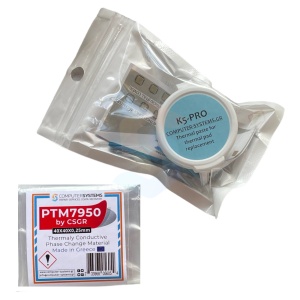
- Retail and DIY · since 2013K5 PROThermal putty for pad replacement in laptops, desktops and consoles, covering the great majority of pad replacement work.View product
- Gaming laptops and slim consolesUPSIREN U6 PROHigh-conductivity putty for thin heatsinks, over GDDR6 memory, power stages and controller chips.View product
- High-power graphics cardsUPSIREN UX PRO UltraThe most conductive member of the family, for 2–4 mm gaps over GDDR6 and GDDR6X memory and power stages.View product
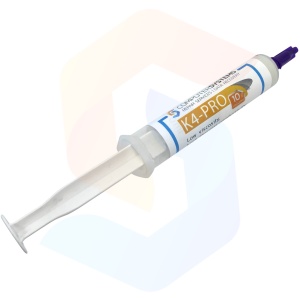
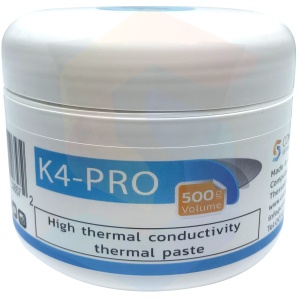
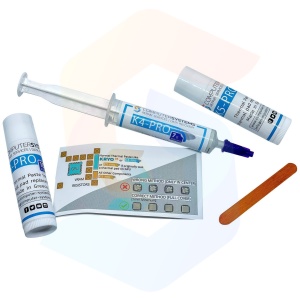
For the processor and graphics processor dies, the project produced K4 PRO, a low-viscosity thermal paste designed for long service life.
A comparative technique for thermal conductivity
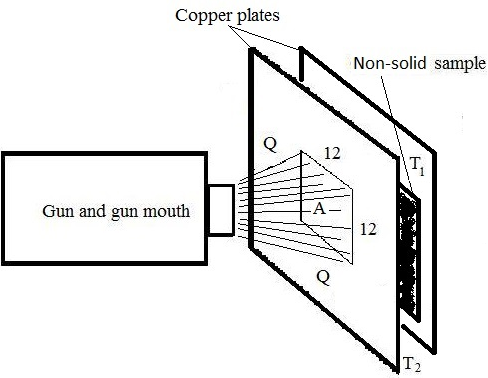
To characterise the new materials, the team developed a comparative technique for measuring thermal conductivity in the laboratory. It was first applied to thin solid samples (MSAIJ 2014) and then extended to paste-like materials, which sit between two copper plates and are heated by a constant flow of hot air while an infrared thermometer reads the temperature of both faces (TELFOR 2014). Reference materials of known conductivity, from glass to copper, calibrate the measurement. The two copper plates reproduce the hot component and the heatsink, so the technique is the most representative for computer cooling systems: the thermal conductivity it measures is the value that corresponds to the material in use, inside a computer cooling system. The thermal conductivity values that Computer Systems publishes for its products come from this technique.
Field evaluation
The method was evaluated in the Computer Systems repair laboratory on customer laptops and desktop PCs, with their BGA components reworked using the permanent stencil formed by casting. In a first appraisal over 8 months, published at TELFOR 2014, the laboratory repaired 2,500 laptops and PCs, 188 of them with the new method, and 160 of these returned to their owners.
Over a 24-month evaluation, the method was applied to 759 customer laptops and PCs from six manufacturers. 626 of them, 82.5%, returned to their owners in working order, with success rates from 79% to 87% across the six manufacturers.
| Manufacturer | Success rate |
|---|---|
| HPPavilion dv, G series, Compaq CQ, ProBook172 of 204 repaired | 84.3% |
| AcerAspire, TravelMate158 of 195 repaired | 81.0% |
| SonyVAIO VGN and VPC series132 of 160 repaired | 82.5% |
| ToshibaSatellite, Qosmio88 of 111 repaired | 79.3% |
| DellInspiron, Latitude39 of 45 repaired | 86.7% |
| FujitsuAmilo37 of 44 repaired | 84.1% |
| All manufacturers626 of 759 repaired | 82.5% |
The research team
The project brought together a PhD research engineer, an electrical engineer and a computer engineer, supported by the engineers and technicians of Computer Systems. The work ran in two connected laboratories. The repair laboratory, equipped with BGA rework stations, a laser cutter and driller and a microscope, carried out the rework trials and the field evaluation. The materials laboratory, with expertise in adhesives, composites, cements and recycled materials, developed and produced the stencils, the underfill series and the thermal pastes.
The Computer Systems Materials Science Laboratory continues to develop and test the company’s thermal products.
Recognition

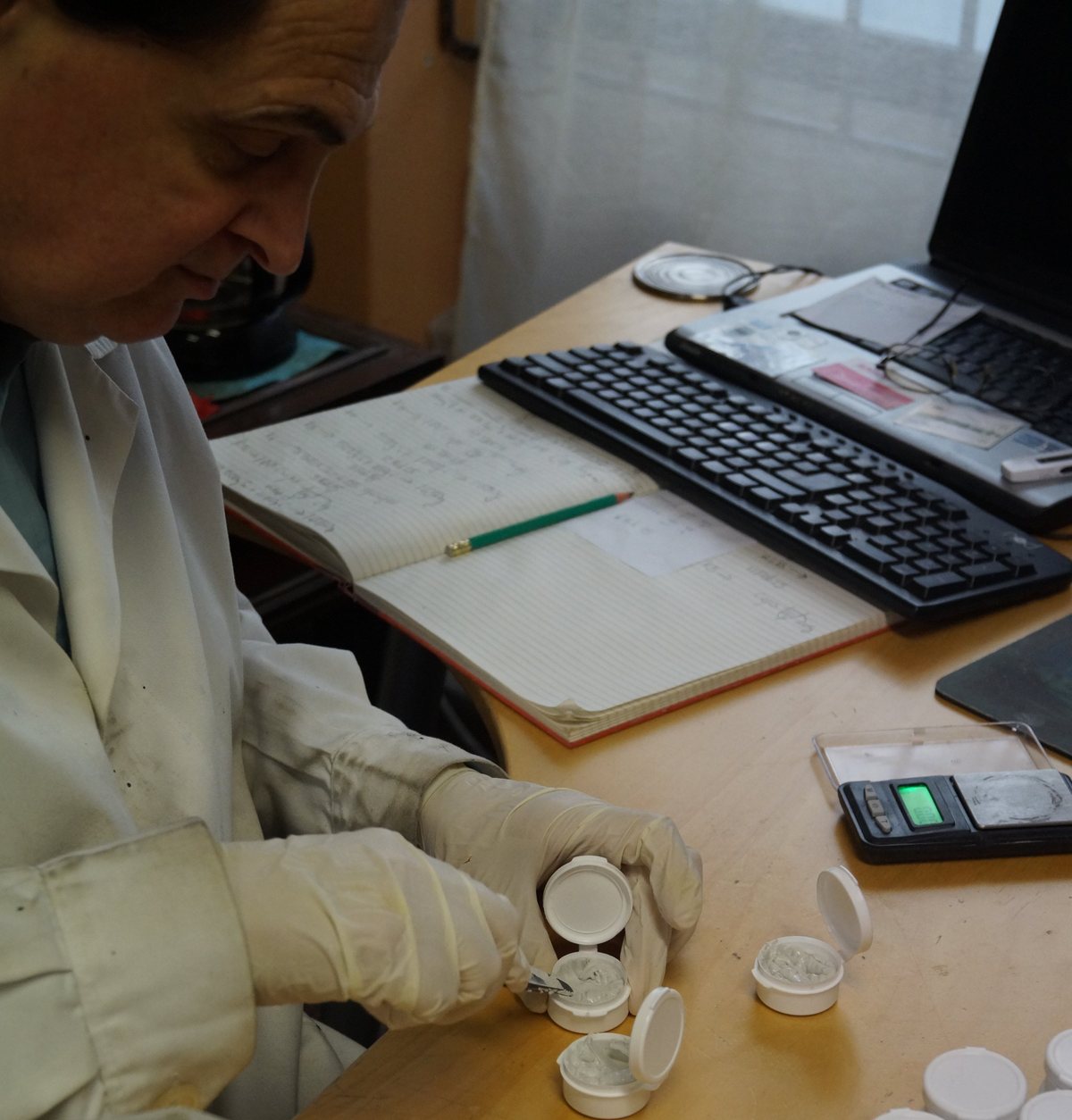
In February 2015, the Thessaloniki Chamber of Small and Medium Sized Industries (BETH) honoured Computer Systems with the Innovation Award of its Entrepreneurship Awards 2014, in recognition of the company’s research and the products that came from it. The Regional Governor of Central Macedonia, Apostolos Tzitzikostas, presented the award, and a former Rector of the University of Macedonia chaired the evaluation committee.
Videos
Publications and patent
-
2014IEEE conference paper
Structure of Ball Grid Array/Permanent Semi-Elastomeric Thermally Conductive Crumb Rubber Reinforced Bituminous Stencil/Printed Circuit Board Interconnects
Studies BGA/stencil/PCB interconnects made with bituminous permanent stencils, presents K5 PRO with the comparative technique for paste-like materials, and reports the 8-month field appraisal.
Read on IEEE Xplore -
2014Patent
Permanent Elastomeric/Semi-Elastomeric Ball Grid Array (BGA) Stencils
Protects the permanent BGA stencils made from elastomeric and semi-elastomeric materials.
View the patent -
2014Journal article
Development of semi-elastomeric thermally conductive crumb rubber reinforced cementitious composites to be used as permanent ball grid array stencils in printed circuit board rework
Develops a family of cementitious composites for permanent stencils and the comparative technique for the thermal conductivity of thin samples.
Read the full text -
2014Journal article
Structure of ball grid array/permanent semi-elastomeric thermally conductive crumb rubber reinforced stencil/printed circuit board interconnects
Examines the structure produced when a permanent semi-elastomeric stencil is formed or placed within a BGA/PCB interconnect.
Read the full text -
2013Journal article
Development of crumb rubber reinforced elastomeric/semi-elastomeric thermally conductive composite materials to be used as permanent ball grid array stencils in printed circuit board rework
Introduces the new family of elastomeric and semi-elastomeric materials, reinforced with crumb rubber, for permanent BGA stencils.
Read the full text
Computer Systems produces these materials in Thessaloniki, and its products have been exported to more than 110 countries.
Explore the productsApple and iMac are trademarks of Apple Inc., registered in the U.S. and other countries. IEEE Xplore is a registered trademark of IEEE. YouTube is a trademark of Google LLC. Acer, Aspire, TravelMate, Dell, Inspiron, Latitude, Fujitsu, Amilo, HP, Pavilion, Compaq, ProBook, Sony, VAIO, Toshiba, Satellite and Qosmio are trademarks or registered trademarks of their respective owners. These names appear on this page to identify the computers repaired in the field evaluation, the hardware that the materials were designed for, and the publications and videos that present the research. BGA COAT, K5 PRO, K4 PRO, CS-FLUX, UPSIREN U6 PRO and UPSIREN UX PRO Ultra are products of Computer Systems. All other trademarks are the property of their respective owners.